The Three Main Factors of Energy are:
Price – How much will it cost and how much will I have to pay for it.
Reliability – Will it be available when I need it and can I rely upon it to remain working, especially at my greatest need.
Practicability – How practicable is the mode of energy for my needs and is the cost to produce versus the cost to me, worth the trouble.
As Australia does not have any major Nuclear power facility, it is not possible to accurately calculate the cost of Nuclear power. However, we can use the facts from another country that does have Nuclear power. England is in the process of building two new Nuclear Power Stations, Sizewell C and Hinkley Point C.
Sizewell C
Estimated cost GBP40Billion
Type – Two-Unit 32000 Mwe EPR
Power – 3.2GW
Cost to Run- GBP92.5/MWh
Power Generated for 6m Homes
Started 2024 – 9 to 12 years to complete, employing 1000 people.
Hinkley Point C
Estimated cost GBP48Billion
Type – Two-Unit 32000 Mwe EPR
Power – 3.2GW
Cost to Run- GBP92.5/MWh to GBP128/MWh
Power Generated for 6m Homes
Started 2017 – estimated completion 2031, employing 6300 people.
Plant life expectancy 60 years
Reports indicate that the final cost for each plant will blow out to GBP50Billion. Once complete they will generate enough electricity for 12 million homes.
The cost of Nuclear for Australia based upon the English model is as follows. The construction cost for Two plants at GBP100Billion is approximately AUD$200Billion. Australia has approximately 12 million homes, so, in theory two Nuclear plants would meet our domestic home needs.
$200B divided by 12m homes equates to $16,667 per home for the construction costs.
The life expectancy of a plant is 60 years, so, $16,667 divided by 60 equates to $277.78 construction cost per Home per year.
The average annual electricity consumption for a 4-bedroom home is 4615KWh, which currently costs about $2200 per year.
1MWh = 1000KWh, so you will require approximately 4.6MWh to power your home for a year. The current minimum cost in England is GBP92.5 per MWh. This equates to AUD$185 per MWh. 4.6MWh x $185 equates to $851 per year for electricity.
The Construction cost and Power use cost for a 4-bedroom Australian home is $277.78 plus $851 totalling $1128.78
If you use the higher MWh cost of GBP128, then the total annual price for an Australian home will rise to $1455.38.
So, based upon these figures the average Australian home annual electricity cost would be approximately $745 to $1072 lower using Nuclear power. This does support the case for Nuclear power, but there would be other factors which would need to be taken into consideration. Australia is considerable larger than the UK and our 12 million homes are spread over a far larger area, necessitating far more infrastructure, which would cost more. Furthermore, we also have approximately 3 million commercial properties, which would require power, so more than two plants would need to be constructed. At $100billion each and the need to have one in each State, the constructions costs could easily balloon to $600billion, which would raise the overall individual home cost.
To make Nuclear power viable you would need to be able to construct a plant at a much lower cost than what it currently costs the UK, which in the short to medium term, is highly unlikely.
The Nuclear option passes the Reliability test, but although appearing to pass the Price test, the Practicability test potentially effects the Price test, resulting in failure for both.
One plant in central Victoria, might be cost effective, as it could cover 5 million homes in greater Melbourne, but it would still cost $100Billion to build. So, is there a cheaper option.
Australia does have major Coal Fired Power facilities, so it is possible to accurately calculate the cost of Coal power.
500-Megawatt Coal Powered Plant
Estimated cost AUD$3Billion
Type – 500 Megawatt
Power – 3.5b KW or 3.5m MW per year
Cost to Run- TBA
Power Generated for 750,000 Homes
Coal Power
One Ton of coal generates 2460KWh. (24 hours x 365 days = 8760 hours). 2460KWh x 8760 hours = 21,549,600KW or 21,549MW
A 500-Megawatt Coal Powered Plant can generate between 3.5m MWh and 4.38m MWh per year. 3.5m MWh divided by 2460KWh = 1,423 tonnes of coal. You need to burn 1,423 tonnes of coal to produce 3.5m MWh per year.
The average annual electricity consumption for a 4-bedroom home is 4615KWh, which currently costs about $2200 per year.
1MWh = 1000KWh, so you will require approximately 4.6MWh to power your home for a year.
Australia has 12 million homes. 12 m x 4.6MWh = 55,200,000 MWh. We need approximately 55,200,000 MWh of electricity to meet the needs of 12 million homes.
55,200,000 divided by 3.5m MWh = 15.77 or 16 Coal Fire Power Plants.
16 x $3billion = $48billion construction costs. Divided by 12 million homes equates to $4000 per home. The life expectancy of a Coal Fire Power Plant is 60 years, which equates to $67 per home.
Approximate price of one ton of black coal in March 2026 is $200. Brown coal can be as low as $130 per ton.
Average annual house consumption is 4615KWh divided by 2460KWh = 1.88 tonnes of coal. 1.88 x $200 = $376 worth of coal.
The Construction cost and Power use cost for a 4-bedroom Australian home is $67 plus $376 totalling $443.
If the cost of coal per ton increased to $256 then the cost per year is 1.88 x $256 = $482 plus $67 totalling $549
These figures are based upon the construction costs of the 16 power plants being spread over the 60-year life span of the plant. If we decide to spread the construction cost per home over only four years then it equates to $1000 per year. Add to this the cost of the coal and the annual price increase to $1376 to $1482. But this would only last for four years, where after the annual price would revert back to $376 to $482. These figures only take into consideration the construction cost and the coal cost, it does not include labour, on-going maintenance and other costs.
There are approximately 10,000 people working in the existing Coal Power Plants, with an approximate salary cost of $2 billion per annum this equates to approximately $167 per home. So, for four years the annual electricity price would be $167 labour, $1000 construction and $482 coal = $1649. If you allow another $350 for maintenance and other costs, that still makes it only $2000. And after four years the annual price would drop to $1000.
The coal option is clearly cheaper than the Nuclear option, with the price of one Nuclear power station covering all the costs of the complete coal power generating system.
Coal also passes all three tests of price, reliability and practicability.
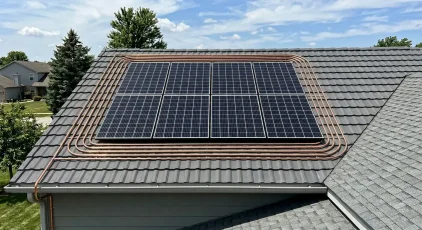
The renewable energy of Australia is produced by a couple of methods, Solar and Wind. For the purpose of this exercise, we will use roof top home solar, as this option directly benefits the user.
Roof top Solar systems vary in price, but currently range from $4000 to $7500, these prices would include parts, materials and installation.
The life expectancy of a solar system has dramatically improved and they can last between 25 and 30 years, albeit, power generation does degrade as the system gets older.
A $4000 system lasting 25 years equates to $160 per home per year.
A $5500 system lasting 30 years equates to $184 per home per year.
A $7500 system lasting 30 years equates to $250 per home per year.
System generated electricity just flows to the grid, where you may receive a tariff rebate, but you might also be charged for it. To be able to use the electricity generated you will require an inverter and a battery.
A 10KW Battery range in price from $11k to $14k and have a life expectancy of between 5 and 15 years. Using the cheapest price and the longest life expectancy, $11k divided by 15 = $734 per year.
An inverter can cost approximately $2000 and may have a life expectancy of 20 years, equates to $100 per year.
Using the cheapest options $4000 system, $11k battery and $2000 inverter the annual cost to a home is $160 + $734 + $100 = $994. The expensive option will cost $250 + $934 ($14K Battery) + $100 = $1284.
Providing you can generate enough electricity for your daily needs and have enough left over to charge your battery; and presuming the battery can store and supply all your evening electricity needs, then solar is a cheap option, but electricity production stops when the sun goes down and it is reduced in bad weather and winter.
Solar passes the price test and practicability test, but fails on the reliability test. But improved technology which can drive down the cost of solar panels and increases the storage capacity and output of batteries, might improve the reliability test.
Just using the construction of the construction and the cost of the energy generation, then Coal is the cheapest, but solar is a close second, followed by Nuclear a close third. If you spread the cost over the life expectancy then the cheapest coal option is just $443, the cheapest solar option is $994 and Nuclear is $1129.
A major factor is longevity with solar needing to be replaced every 30 years, whereas coal and nuclear each last 60 years. Coal and Nuclear are the most reliable being available 100% of the time. Solar panels at best are only 50%, with studies showing the reliability as low as 33%. The hope is that batteries will extend the available power, but it is hit and miss.
Home Solar, once installed, does need anything else, other than good sunny weather. Nuclear will require employees to operate it, after the plant is constructed and Coal requires a lot of employees and needs regular maintenance, which all adds to the costs.
The information above is not to be regarded as scientific fact, but more to be used by a lay person to help understand the costs. Unfortunately, there is far too much politics involved in Australia’s energy question. We should be focusing on what provides the cheapest and most reliable energy. Just because coal is the cheapest, is not a reason to disregard all other sources of energy. Coal, gas and oil will not last forever, so if we can generate our electricity by other means, which help conserve of coal, gas and oil stocks, then this should be embraced. The obsession with clean energy, should not blind us to the obvious, such as cost and other pollutants. Nuclear may not produce carbon omissions, but it does produce nuclear waste, which is radioactive and deadly, so which is worse, carbon in the air or radioactive waste buried under ground.
Some commentators talk about Nuclear power as if it is the only viable option, but at $100 billion per power plant and the possibility of needing multiple plants to meet Australia’s needs, this option will first be very expensive. The cost of one Nuclear plant is the equivalent of 25m roof top solar arrays, twice as many as we currently require.
The Conservative view is that energy production should not be a competition between competing interests, but a collaboration to maximise all the available resources for the benefit of everyone.
We will build three coal fired power plants in Victoria; these plants will produce enough cheap and reliable electricity for our current needs. These plants will complement the current power generators.
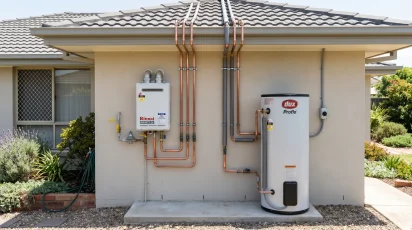
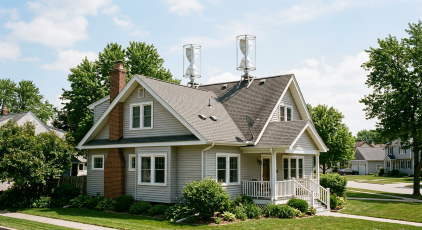
Ideally all buildings, especially homes should have roof top solar arrays, solar hot water generation and two mini wind turbines all of which can harness the power from the sun, heat and wind.
Battery storage will enable spare electricity generated to be collected and then used in the evenings. The batteries will be continuously topped up by electricity generated by the roof top wind turbines, it won’t be much, but every little helps.
It is envisaged that during the six months of summer (end of spring and the beginning if Autumn) a typical house should be able to generate all its daily electricity needs and hot water needs just from renewables, with only minimal drawing on the grid. The coal power plants will still generate electricity, as this will help cater for the demands from manufacturing and business, which may not be able to utilise renewables. Any excess electricity generated can be stored in large batteries located at the power plants, which can be used to provide electricity during the evens, when solar arrays stop producing. We view renewables as a complimentary power source to Coal, one which makes sense to harness free power from the Sun and Wind; and to enable us to preserve our coal reserves for longer.